 how-to
How to Identify Roof Leak Sources Step by Step
Last Updated: 2 November 2026
Quick Summary
To identify roof leak sources, work from the ceiling stain back towards the highest point of the roof, because water runs downhill along rafters and pipes before it drips. The leak source usually sits uphill and to one side of the stain, so check each junction on the way.
- Water tracks along timber and insulation before it drips
- Ceiling stains can appear several metres from the entry point
- Rule out pipes and tanks first, since they can mimic a roof leak
- Flashings, valleys and chimney joints are the most common weak points
- Mark the edges of a damp patch with a pencil to track whether it grows
Table of Contents
- Signs of a Roof Leak in the Loft
- How to Trace Water From Inside the Property
- Roof Leak But No Visible Damage: What to Check
- Common Causes of Roof Leaks to Inspect
- Roof Leak Detection Mistakes to Avoid
- Booking a Roof Inspection in Lincoln With M.C. Stormproof Roofing
- Frequently Asked Questions
Finding how to identify roof leak sources is harder than it looks, because water rarely drips straight down from the place where it gets in. Water runs along rafters, sarking and pipes before it shows up on a ceiling. That is why the stain you see is often metres away from the real fault.
Here is the short answer: water finds the easiest path downhill, so the leak source sits uphill and to one side of the stain. Work from the stain back towards the highest point of the roof, checking each junction on the way.
- Water tracks along timber and insulation before it drips
- Ceiling stains can appear several metres from the entry point
- Stains are a symptom, so you need to trace the route
Signs of a Roof Leak in the Loft
The loft often tells you more than the ceiling does. Go up with a torch on a dry day and a dry night, then look closely at the underside of the roof covering.
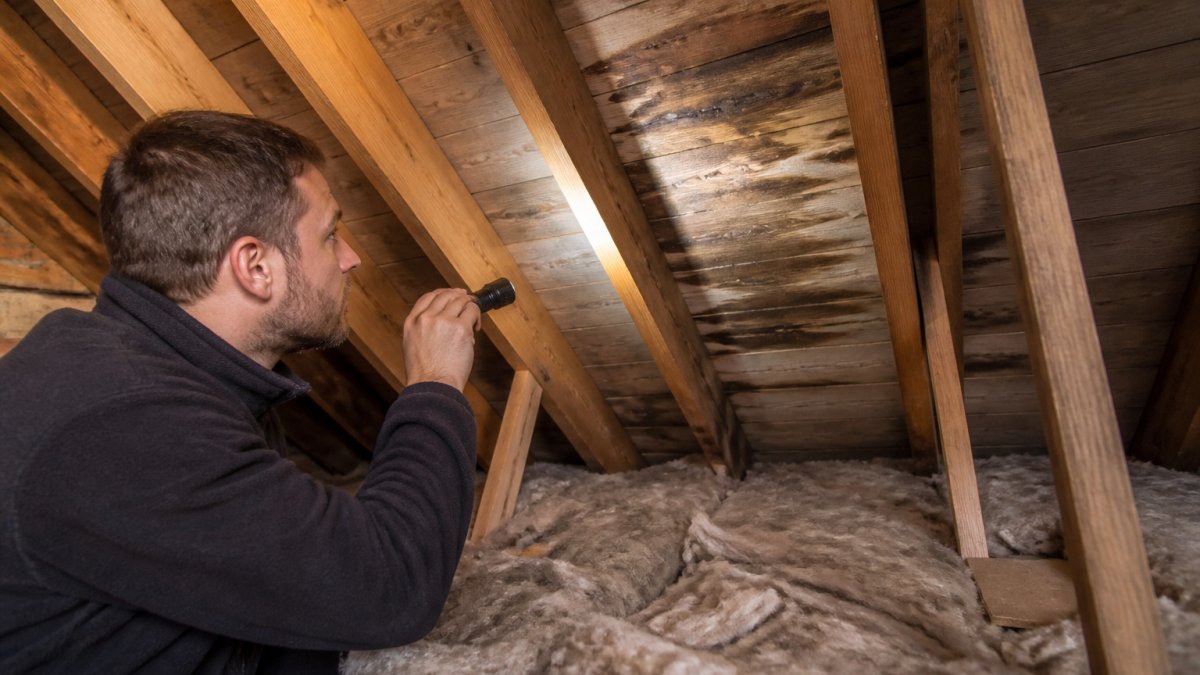
- Dark or damp patches on the underside of the roof boards
- Staining or rust marks on nails and metal fixings
- Wet or compressed insulation, especially near the eaves
- Mould or a musty smell in one area only
- Drips or puddles on the loft floor after rain
A homeowner using a torch on timber rafters to spot a damp patch is the first check most people can do safely from the hatch. Stay on the joists, never the plasterboard, and avoid the loft if you feel unsafe.
How to Trace Water From Inside the Property
Start with the stain and work outwards and upwards. If the drip is active, learn quick temporary fixes you can do today while you arrange a professional. Mark the edges of any damp area with a pencil so you can see if it grows over several days of rain.
Following the Path Down From the Stain
Water usually leaves a trail. Follow the route from the ceiling back up through the loft.
- Note where the stain is largest and wettest
- Check the timber directly above it for tracks or darkening
- Move uphill along the rafters towards the ridge
- Look for the first point where the damp trail starts
Checking Pipes and Plumbing First
Before you blame the roof, rule out the plumbing. A leaking pipe, tank or overflow can look exactly like a roof leak.
- Run a tap or flush a toilet and see if the stain changes
- Check loft tanks, joints and the overflow pipe for drips
- Look at bathroom and kitchen waste pipes above the stain
- Dry stains that appear only after running water point to plumbing
Roof Leak But No Visible Damage: What to Check
Sometimes the roof looks fine from the ground but still lets water through. The usual cause is a small gap at a junction rather than a broken tile.
Hidden leaks often come from:
- Nail holes or screws that have lifted slightly
- Underlay that has torn or sagged between rafters
- Gaps where tiles overlap at the edges
- Small cracks in lead or mastic sealant
If you cannot see the cause from below, it is worth getting a roofer to check from above.
Common Causes of Roof Leaks to Inspect
Most leaks come from a short list of weak points. Check these first, because they fail far more often than the main tiled field.
Flashings, Valleys and Chimney Joints
Flashings seal where the roof meets walls, chimneys and other fixed parts. They are the most common weak spot.
- Cracked or lifted lead around the chimney
- Dried-out sealant where the flashing meets the brickwork
- Debris trapped in valleys stopping water from draining
- Gaps where the valley lining has split
Gutters, Missing Tiles and Ridge Damage
Water that cannot leave the roof will find a way in. Blocked or sagging gutters can push water back under the tiles.
- Blocked or overflowing gutters pouring water down walls
- Slipped, cracked or missing tiles, especially after storms
- Loose or cracked ridge tiles letting water run into the top of the roof
- Damaged or sagging fascias holding water against the edge
The table below summarises the most common weak points to check first, using the causes and signs covered in this section.
| Weak point | Typical sign | Fix or check |
|---|---|---|
| Flashings and chimney joints | Cracked or lifted lead, dried sealant | Inspect and reseal or replace |
| Valleys | Debris trapped, split lining | Clear debris and repair lining |
| Gutters | Blocked or overflowing | Clear so water drains away |
| Missing or slipped tiles | Damage after storms | Replace or reposition tiles |
| Ridge tiles | Loose or cracked | Re-bed or replace ridge tiles |
| Fascias | Damaged or sagging | Repair so water does not pool |
Roof Leak Detection Mistakes to Avoid
These errors waste time and often hide the real problem.
- Fixing the stain and not the source, so the damp returns
- Checking only after a dry spell, when the leak is not active
- Climbing onto a fragile roof without proper access equipment
- Assuming every stain is a roof leak without checking plumbing
- Patching a single tile when the underlay behind it has failed
A common mistake is painting over a stain and calling it fixed. The stain will come back as soon as it rains again.
Booking a Roof Inspection in Lincoln With M.C. Stormproof Roofing
If you have traced the water but cannot confirm the source safely, a professional inspection saves guesswork. M.C. Stormproof Roofing covers roof repair, full replacement, flat roofing and guttering across Lincoln and the surrounding area. Get a free quote from M.C. Stormproof Roofing to have the source checked and to discuss a repair plan. For current prices, please visit the M.C. Stormproof Roofing website or request a quote.
Frequently Asked Questions
How do you find the source of a roof leak?
Start in the loft during or just after rain, and look for wet insulation, dark timber, drips or water tracking along rafters. Note the position relative to the roof structure, then work outwards and upwards to the nearest roof features such as flashings, valleys or tiles. Mark the spot, photograph it and check whether water runs along a line rather than straight down. If the source is still unclear after this, a professional roof inspection can help confirm the source.
Can a roof leak occur without visible damage?
Yes. Water can enter through a lifted ridge tile, a failed lead flashing or a cracked mortar joint where the damage is hidden from ground level. It can also run along a rafter or membrane before dripping into the property some distance away. Hairline cracks and worn sealant are easy to miss from the ground. This is why a loft inspection with a torch, along with a check of the flashings and valleys, is often more useful than a visual scan of the tiles alone.
How can you tell whether a leak is coming from the roof or a pipe?
Check whether the leak appears only during or after rain, which points to the roof, or whether it occurs at any time, which suggests a pipe, tank or condensation. Look for drips near plumbing, boiler flues or water tanks in the loft, and dry the area fully before watching for new moisture. Roof leaks usually show a stain that grows with rainfall, while plumbing leaks tend to remain constant regardless of the weather.
When should you call a roofer about a roof leak?
Call a roofer as soon as you see active dripping, staining that spreads after rain, or damp patches in the loft, particularly after storms. Early action limits damage to timbers, insulation and plasterwork, which can be costly to repair. If you cannot identify the source safely, or the leak continues after you have checked the obvious points, arrange an inspection. M.C. Stormproof Roofing can assess the roof in Lincoln and provide a free quote, with pricing depending on the extent of the work required.