 how-to
How do you fix an emergency roof leak?
Last Updated: October 25, 2026
Quick Summary
Emergency roof leak repair requires immediate action to stop water reaching your belongings and identify where water is entering your home. Move furniture and valuables away, place buckets to catch drips, and call an emergency roofer the same day to prevent water penetrating deeper into your home's structure.
- Document damage with photos and video for insurance claims before calling a roofer
- Mould can establish itself within 24 to 48 hours in stagnant, damp air
- Temporary repairs like tarping cost a few hundred pounds and buy time for permanent solutions
- Permanent repairs to affected areas typically cost between several hundred and a couple of thousand pounds
- Turn off power to affected areas if water has reached light fittings, sockets, or wiring
Table of Contents
- What to do immediately when you spot an emergency roof leak
- Temporary roof leak repair: your first response
- Protecting your home and belongings during a leak
- Roof leak after storm: assessing damage and next steps
- Calling an emergency roofer: what information you need ready
- Understanding roof leak repair cost and your options
- Getting your emergency roof repair started today
- Frequently Asked Questions
What to do immediately when you spot an emergency roof leak
When water starts dripping through your ceiling, your first instinct is often panic. Don't. The next few hours determine whether you contain the damage or watch it spread throughout your home. An emergency roof leak repair requires immediate action, but the right steps are straightforward.
First, stop the water reaching your belongings. Move furniture, electronics, and anything valuable away from the affected area. If water is pooling on the floor, place buckets underneath to catch it, this protects your flooring and prevents secondary damage to lower levels.
Next, identify where the water is entering. Go into your loft or attic during daylight if you can safely access it. Look for the source of the leak, not just where it's dripping through the ceiling below.
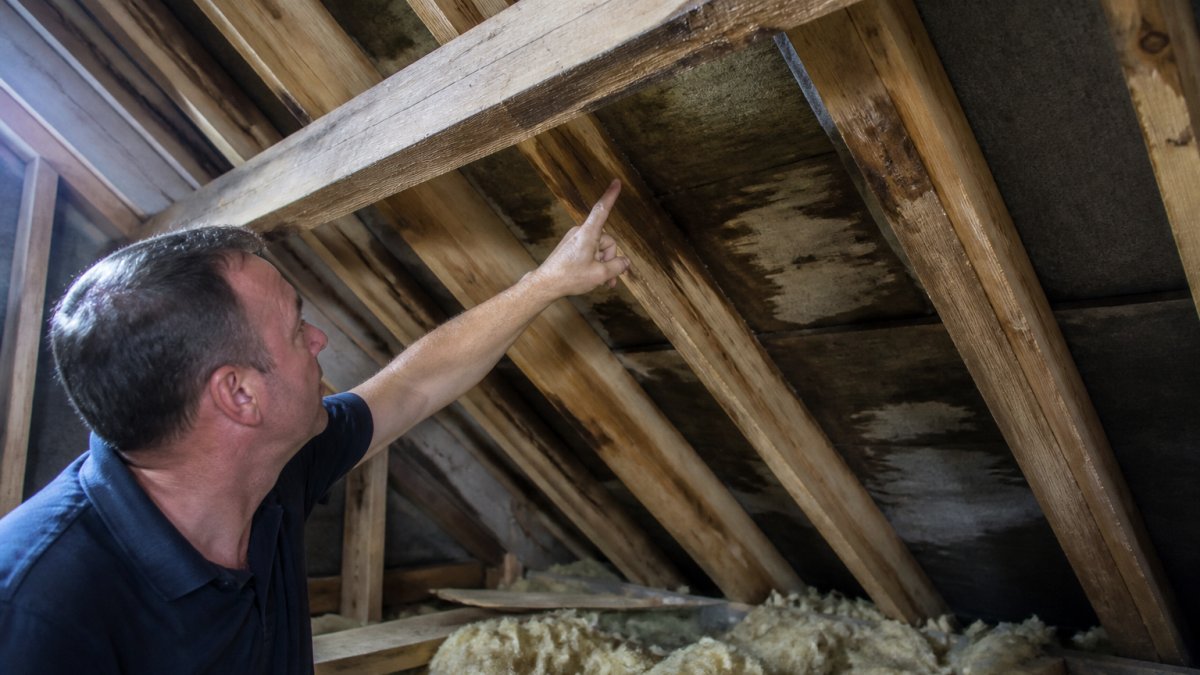
Document the damage with photos and video. These records matter for insurance claims and help any roofer you call understand the severity before they arrive. Photograph the interior water damage, stains on ceilings and walls, and any visible damage in the loft.
Call an emergency roofer the same day. Waiting until tomorrow gives water more time to penetrate deeper into your home's structure. At M.C. Stormproof Roofing, we understand that roof leaks don't wait for convenient scheduling.
Temporary roof leak repair: your first response
You've identified the leak. Now you need to stop water entering until a professional can fix it properly. Temporary measures aren't permanent solutions, but they buy you time and prevent catastrophic damage while you arrange proper repairs.
The simplest temporary fix is a bucket or container placed directly under the drip. This sounds basic, but it's genuinely effective at protecting your floor and contents. Replace or empty the bucket regularly, a full bucket can overflow and cause more damage than the leak itself.
For leaks in the loft space above your ceiling, you can sometimes divert water toward a safer location. If water is pooling on insulation, carefully pull the insulation back to expose the structural timber beneath. Water will then run along the timber toward the eaves, where it can drip into a bucket or gutter rather than soaking into your insulation and ceiling materials.
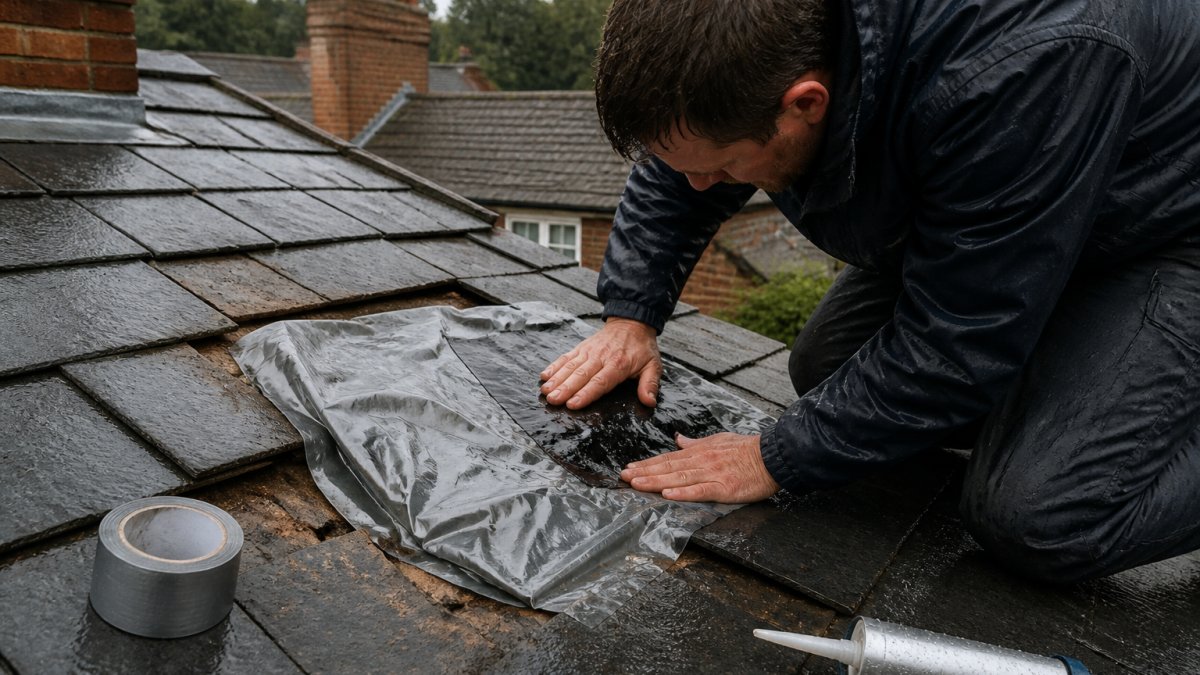
Tarping the roof from outside is more aggressive but more effective. If you're comfortable working at height and the weather permits, a heavy-duty tarpaulin weighted down with sandbags or rope can cover the damaged area and redirect water away from your home. Secure it well, wind will exploit any loose edge.
Do not use temporary sealants or roof patches as a DIY fix unless you're experienced. Roofing sealant applied incorrectly can trap moisture and worsen the damage. A temporary roofer should assess the damage and apply materials correctly, which is why calling M.C. Stormproof Roofing quickly matters.
Protecting your home and belongings during a leak
Water damage spreads faster than most homeowners expect. Your immediate priority after stopping the leak is preventing secondary damage to the rest of your property.
Move everything away from the affected area. Furniture, carpets, boxes, electronics, anything water can damage needs to go. If items are too heavy to move alone, ask a neighbour or friend to help. Don't leave a sofa or bed under an active drip thinking it will dry out later; water-logged furniture develops mould and becomes a health hazard.
Open doors to improve air circulation. Close doors to unaffected rooms to contain moisture and prevent it spreading through your home's air circulation system. If you have a dehumidifier, run it in the affected area. If not, opening windows (even in cold weather) is your next best option.
Check adjoining rooms and spaces below the leak. Water travels through walls and down internal cavities, sometimes emerging far from the original entry point. Look for damp patches, discolouration, or soft areas on ceilings and walls in rooms next to the leak. Early detection prevents hidden damage from spreading unnoticed.
If the leak is extensive or you're concerned about electrical safety, consider turning off power to the affected area. Water and electricity don't mix; if water has reached light fittings, sockets, or wiring, the risk of shock or fire exists. If you're unsure whether it's safe, ask a qualified electrician or call your emergency services.
Roof leak after storm: assessing damage and next steps
Storms often expose weaknesses in roofing that were already developing. High winds, heavy rain, or hail can tear slates, dislodge tiles, or damage guttering, and sometimes the damage isn't visible from inside until water starts appearing.
After a storm, inspect your roof visually from the ground using binoculars if you have them. Look for missing tiles, slates, or lead flashing. Check your gutters for debris, leaves, or damage. Blocked gutters cause water to back up and find its way under roof coverings, so clearing debris is part of your immediate response.
If you see obvious damage, missing tiles, torn felt, or exposed timber, you have an emergency roof leak situation even if water hasn't appeared inside yet. Damage that's visible from below will let water in during the next rain. Don't wait for the leak to develop; call a roofer immediately.
For roof leaks that appear after a storm but without obvious external damage, the problem is usually less visible. Flashing around chimneys, valleys where two roof slopes meet, or seams in flat roofs can separate or lift without obvious signs from below. These require professional inspection to locate and repair properly.
Document storm damage for insurance. Take photos of any visible roof damage, debris in gutters, and water damage inside your home. Note the date and time of the storm. Insurance companies often require evidence that damage occurred during a specific weather event, so contemporaneous photos matter. Contact your insurer promptly; they may have specific procedures for emergency repairs.
Calling an emergency roofer: what information you need ready
When you call an emergency roofer, you'll need to provide information quickly. Have these details ready before you dial.
Describe the location of the leak. "Water is coming through the bedroom ceiling" is clear. "It's near the south-facing wall, above the bathroom" is even better. If you've been in the loft, describe what you saw: "I found water stains on the timber above the kitchen, about two metres from the gable end."
Explain what triggered the leak if you know. "This started during last night's storm" or "I noticed it this morning after heavy rain" helps the roofer understand whether the problem is storm damage or a pre-existing weakness that's finally failed.
Tell them the size of the leak. Is water dripping slowly, or is it pouring? Is it one location or multiple places? Are you seeing active water entry or just damp patches? The severity affects how urgently they'll respond and what equipment they bring.
Mention any temporary measures you've already taken. "I've placed buckets under the drip and opened windows" tells them you've contained the immediate damage. They'll know not to expect a flooded loft.
Ask about their response time for emergencies. A roofer who can attend the same day is worth the call.
Understanding roof leak repair cost and your options
The cost of an emergency roof leak repair depends on what's actually wrong. A temporary patch to stop immediate water entry costs far less than a full roof replacement. Understanding your options helps you make decisions quickly.
A temporary repair, tarping the affected area, sealing obvious gaps, or redirecting water, might cost a few hundred pounds and takes a few hours. This buys you time to arrange a permanent fix without rushing into an expensive decision.
A permanent repair to the affected area, replacing damaged slates or tiles, resealing flashing, or patching a section of flat roof, typically costs between several hundred and a couple of thousand pounds depending on the extent of damage and roof type.
A full roof replacement is necessary when damage is widespread, when the roof is already near the end of its life, or when the cost of multiple repairs approaches replacement cost.
Your insurance may cover some or all of the cost if the damage is storm-related or accidental. Check your policy before paying for repairs yourself. Some insurers require you to obtain quotes from specific approved contractors, while others reimburse you after the work is completed.
When you call for a quote, be honest about what you've already done. A roofer who knows you've placed temporary protection can plan their work accordingly. They'll assess the full extent of damage and recommend the most cost-effective permanent solution.
Emergency roof leak repairs range in cost and scope depending on the damage and solution needed.
| Repair type | Typical cost | What it includes |
|---|---|---|
| Temporary repair | Few hundred pounds | Tarping, sealing gaps, redirecting water |
| Permanent repair to affected area | Several hundred to couple of thousand pounds | Replacing damaged slates or tiles, resealing flashing |
| Full roof replacement | Larger investment | Solves problem completely, protects for decades |
Getting your emergency roof repair started today
The difference between a contained leak and catastrophic water damage is often just a few hours. When you spot an emergency roof leak, your next step is a phone call.
M.C. Stormproof Roofing responds to emergency calls. We'll assess your roof, explain what needs to happen, and get you protected. We specialise in emergency repairs, full replacements, and everything in between, whether your roof is slate, tile, or flat.
Call us today for an emergency response. Have your roof details ready: the location of the leak, what you've observed, and when it started. We'll discuss your options, explain what permanent repairs look like, and get you a free quote for the work ahead.
Your home's protection starts with that first call. Don't wait.
When water starts appearing in your home, the instinct to delay or hope it stops is natural. It won't. An emergency roof leak demands immediate action, temporary protection first, permanent repair second. M.C. Stormproof Roofing provides both. We assess damage thoroughly, explain your options clearly, and deliver durable repairs that protect your home for years ahead. Get a free quote today and stop the leak before it stops you.
Frequently Asked Questions
What should I do first if my roof starts leaking?
Stop water from spreading further. Move furniture and belongings away from the affected area, place buckets under drips, and turn off electrics if water is near light fittings or cables. Open windows to improve ventilation and reduce humidity. If the leak is severe or spreading rapidly, contact an emergency roofer immediately. Document the damage with photos for insurance purposes.
How can I stop a roof leak temporarily?
Temporary roof leak repair can involve placing a tarpaulin over the affected section from outside (if safe to access), securing it with rope or weights. Inside, use buckets, towels, or a wet/dry vacuum to manage standing water. Avoid climbing onto a wet roof yourself; wait for professional help. These measures buy time but do not replace proper repairs, contact a roofer as soon as conditions allow.
How much does emergency roof leak repair typically cost?
Roof leak repair cost depends on the leak's location, size, cause, and whether structural damage exists beneath the surface. A temporary patch costs less than full repairs, but addressing the root cause properly prevents recurring problems and water damage. Contact M.C. Stormproof Roofing for a free quote; we assess your specific situation and provide transparent pricing before work begins.
How quickly should an emergency roofer respond?
A genuine emergency roofer should respond within hours during business hours, especially if heavy rain or structural risk is present. Response times vary based on weather, current workload, and your location. When you call, describe the severity clearly, active leaks into living areas are higher priority than slow seeps. M.C. Stormproof Roofing serves the area to prevent further water damage.
