 how-to
How to Stop Flat Roofs Pooling Water in the UK
Last Updated: October 28, 2026
Quick Summary
Flat roofs pool water because they are rarely truly flat, and the built-in fall that moves rain to the drains has been lost. Common causes include a sagging deck, uneven insulation, a blocked outlet or an outlet set above the roof surface. Standing water is a problem, not a cosmetic issue, so it should be checked and fixed.
- A flat roof usually has a slight fall, often between 1 and 3 degrees, to move rain to the drains.
- Water staying on the surface for more than 48 hours is generally considered ponding.
- Check for falls and low spots by walking the roof after a dry day with a long spirit level.
- Clear the outlet by hand with a brush or plastic scraper, not metal tools or harsh chemicals.
- Sagging, spreading ceiling stains or sticking doors mean the roof needs urgent professional inspection.
Table of Contents
Flat roofs pool water because they are rarely truly flat. Almost every flat roof has a slight fall built in so rain runs towards a drain or outlet, and when that fall is lost, water sits.
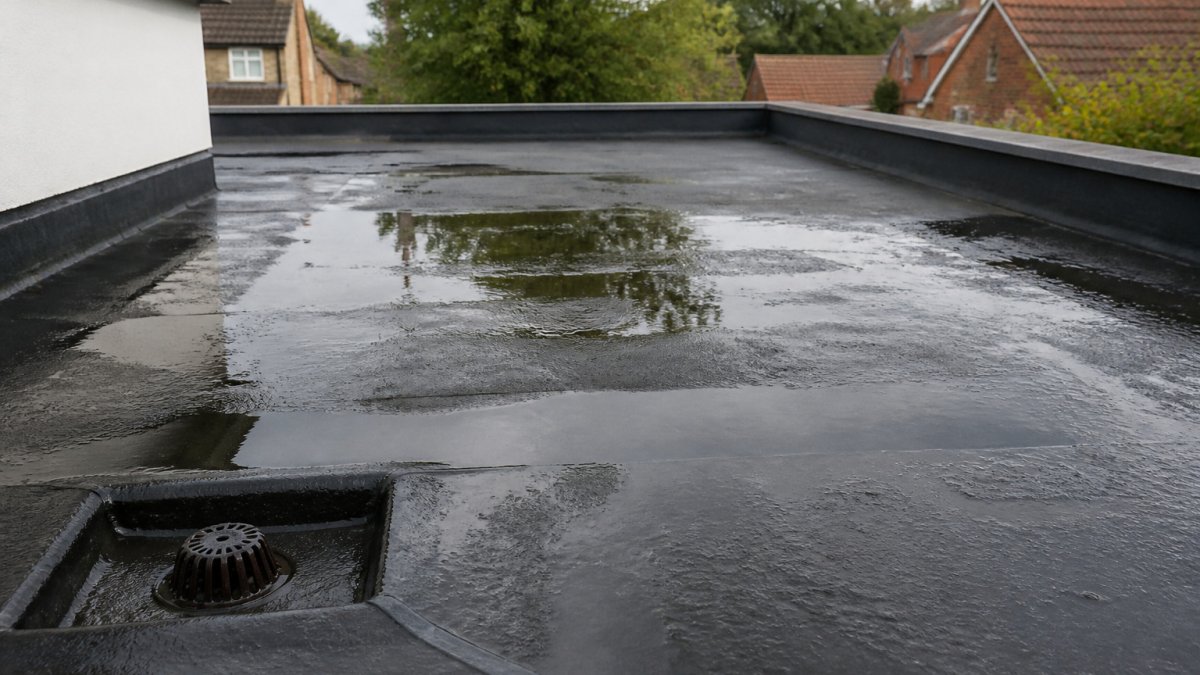
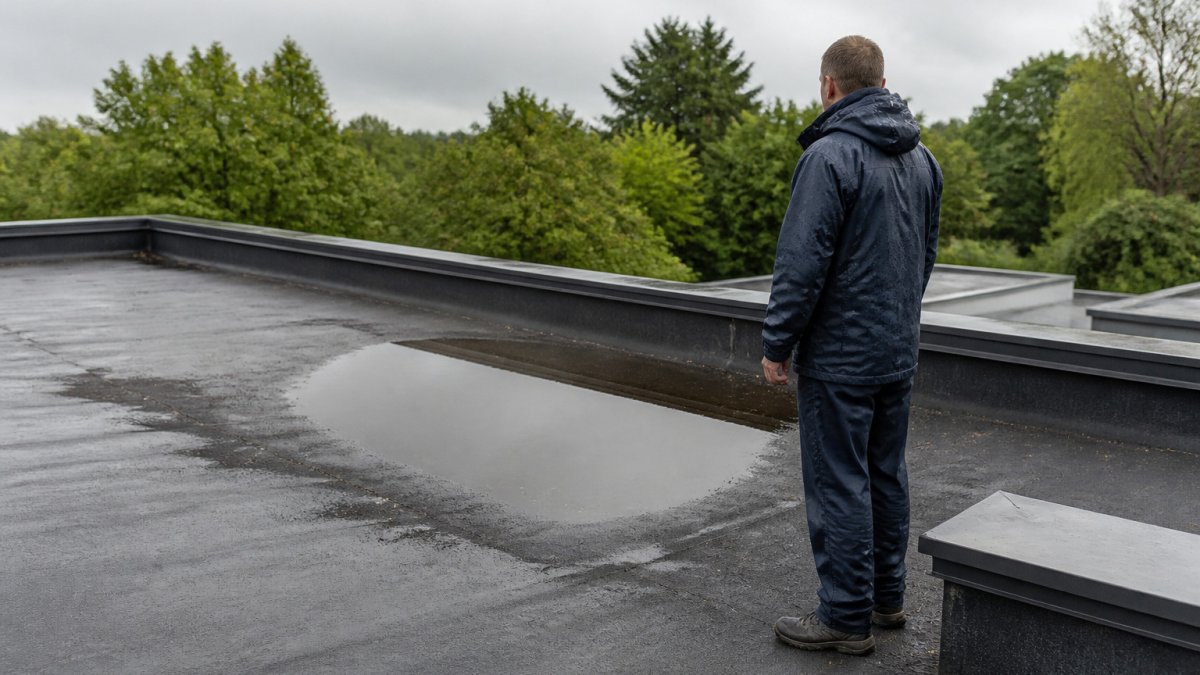
A flat roof is a roof with a gentle slope, often between 1 and 3 degrees, that moves rain to the edges and into the drainage system. Water that stays on the surface for more than 48 hours is generally considered ponding, and it puts extra weight and strain on the structure and membrane. If the water keeps coming back after a fix, see why repairs fail and which fixes last.
Several things cause this. The most common are:
- The deck has sagged over time, creating a low spot in the middle
- The insulation was laid unevenly, so the membrane follows the dip below it
- A drain or outlet sits higher than the surrounding roof surface
- Debris, moss or leaves block the outlet and stop water leaving
- The original build was not sloped enough to begin with
A common mistake is assuming pooling is just a cosmetic issue. Standing water adds load, speeds up membrane wear and can soak into the seams. Over time, that is how small pools turn into leaks inside the ceiling.
Checking Your Roof for Falls and Low Spots
The first job is to see where the water actually sits. Wait for a dry day after rain, then walk the roof with a long spirit level or a straight board and a spirit level on top. Check the fall from the centre of the roof towards each outlet.
Look for these signs:
- Pools that stay after the rest of the roof has dried
- Dark staining or a tidemark showing where water has been sitting
- Soft spots or ridges in the membrane
- Cracks or bubbles where the surface has flexed
Mark each low spot with chalk so you can measure it. A dip of a few millimetres over a metre can be enough to hold water, so do not dismiss shallow areas.
Finding and Clearing a Blocked Flat Roof Drain
Start by removing the outlet cover and clearing leaves, grit and moss by hand. Use a long brush or a plastic scraper rather than metal tools that can damage the membrane.
Then pour a bucket of water near the outlet and watch how fast it drains. If it still backs up, the blockage is deeper in the pipe, and a drain specialist should check it with a camera.
Watch out: do not use harsh chemical drain cleaners on a flat roof outlet. They can damage the membrane and the outlet seal.
Assessing Flat Roof Drainage Problems Around Gutters and Outlets
Pooling often starts at the edges rather than in the middle. Check that gutters fall towards the downpipes and that the outlet sits at the lowest point of the roof. If an outlet is set above the membrane, water will always pool around it.
Also look at how water leaves the roof. Blocked downpipes, cracked gutters and loose fixings all send water back onto the roof surface. Clear any debris from gutters at least twice a year, and more often if trees overhang the roof.
Flat Roof Water Pooling Solutions That Actually Work
- Clear the outlet and gutters. This costs little and fixes many cases straight away.
- Add tapered insulation. This builds in a proper fall so water runs to the drain instead of sitting.
- Raise or reposition the outlet. This suits roofs where the drain sits above the lowest point.
- Overlay or replace the membrane. This is the right choice where the surface has worn or cracked.
- Repair or replace the deck. This is needed where the structure has sagged.
Spotting Flat Roof Sagging Under Water and When to Act
Sagging is the warning sign that pooling has become structural. If you can see a dip that is getting deeper, or if ceilings below are bowing, the roof needs attention soon.
Act quickly if you notice:
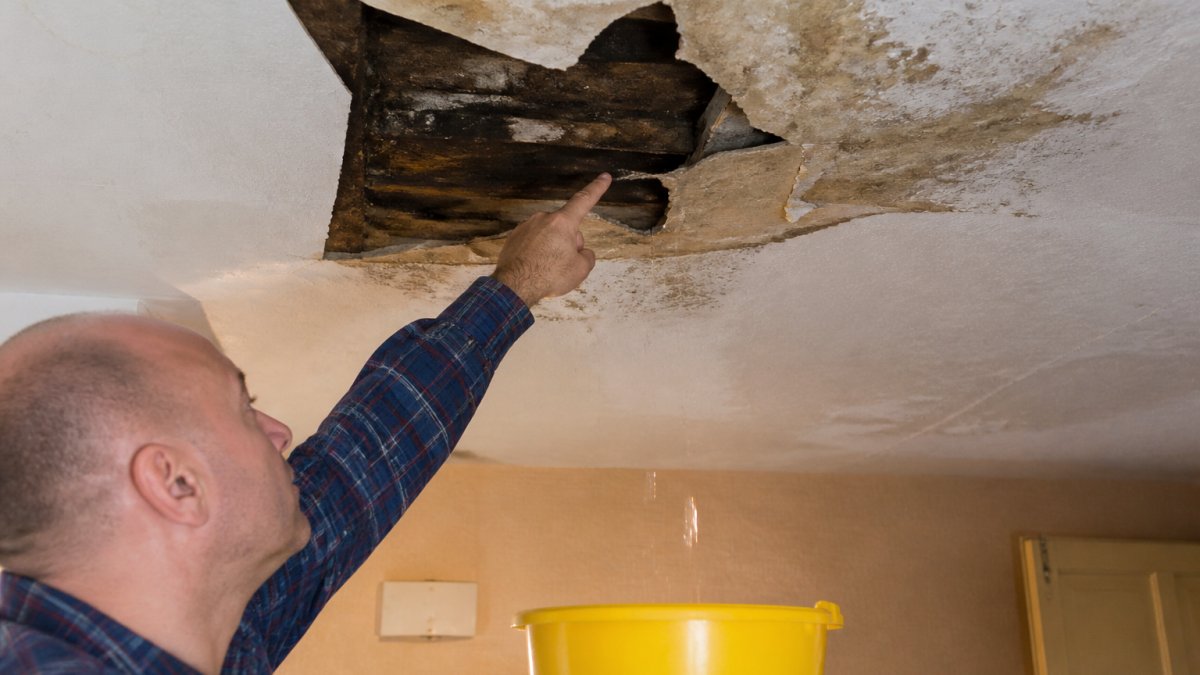
- Ceiling stains that are spreading or wet to the touch
- Doors or windows that have started to stick
- Visible cracks in plaster or walls near the roof line
- Water coming through light fittings or ceilings after rain
If you spot any of these, keep people off the roof, avoid the area below, and get a professional to inspect it promptly. Find out how to handle an emergency roof leak while you wait for help. Sagging can get worse quickly once water is held in the structure.
Booking a Professional Survey for Your Flat Roof
When you book, ask what the survey covers, whether the findings are written down, and what the proposed fix involves. Learn how to spot unreliable roofers before you commit to anyone. Ask how the work will be guaranteed, and whether the quote covers any structural repairs if they are found once work starts. Get a written, itemised quote so you can compare like with like. For a free quote on your flat roof, contact M.C. Stormproof Roofing.
Frequently Asked Questions
Why does water pool on a flat roof?
Flat roofs are rarely perfectly level. Water pools where the surface has dipped, usually because the falls (the slight gradient that carries water to the outlets) are too shallow or because the deck has moved over time. Other causes include a blocked outlet, a damaged membrane or insulation that has settled. Water that sits for days or deepens over time points to a problem that should be checked by a roofer.
Is it normal for water to sit on a flat roof after rain?
Some standing water after heavy rain is normal, as long as it drains away within a day or so. Water that remains for 48 hours or more is a sign that the drainage is not working as intended. Persistent ponding stresses the membrane, speeds up wear and can lead to leaks, so it is worth investigating even if the roof has not yet started to leak.
How do I stop water pooling on a flat roof?
Start by clearing the outlets and gutters so water can leave the roof. Pricing depends on the size of the roof, the access and the materials needed, so ask M.C. Stormproof Roofing for a quote on your specific roof.