 how-to
Why Do Roofs Leak After Repair? Fixes That Last
Table of Contents
- Why Roofs Leak After Repair: The Honest Answer
- Common Causes of Roof Leaks That Outlast a Repair
- How to Find a Roof Leak When the Obvious Fix Didn't Work
- What to Do When Your Roof Leaks After a Repair
- Signs Your Roof Repair Failed (and What It Will Cost You)
- When a Repair Is the Wrong Answer
- Choosing a Roofer Who Fixes the Cause, Not the Symptom
- Conclusion
- Frequently Asked Questions
Last Updated: 18 October 2026
Why Roofs Leak After Repair: The Honest Answer
Most roofs leak after repair because the repair addressed the wrong thing. The water rarely enters where the damage shows up. It travels along timbers, under tiles and down rafters before it drips through your ceiling, often metres from the actual entry point.
That gap between the visible damp patch and the true defect is the single biggest reason callbacks happen. A repair that looked sound on the day can be followed by a leak in the first heavy rain. Below, we explain why roofs leak after repair, how to trace the real fault, and when a patch-up is simply the wrong answer.
Common Causes of Roof Leaks That Outlast a Repair
The most common causes of roof leaks after a repair are misdiagnosis, failed flashing, blocked gutters and hidden damage that was never opened up. A repair only works if it targets the actual point of entry.
The Water Never Entered Where You Were Told
A ceiling stain tells you where water exits, not where it enters. Water can run sideways along a rafter for several metres before finding a gap.
So a roofer who patches the tile above the stain may seal nothing at all. The real fault could be:
- A cracked flashing collar around a soil vent pipe
- A failed mortar fillet at a party wall
- A lifted verge tile three metres to the side
- A nail hole in an underlay below the visible damage
This is why a proper inspection starts in the loft, not on the roof.
Flashing, Gutters and the Details That Get Skipped
Flashing is the metalwork that seals junctions: around chimneys, in valleys, at abutments and against dormers. It is where most leaks begin, and it is the detail most often rushed.
Gutters matter just as much. When a gutter backs up, water sits against the fascia and rots the felt behind it. Many homeowners find that a "roof leak" is actually an overflowing gutter soaking the eaves.
A common mistake is sealing a chimney with mastic and calling it fixed. Mastic fails within a season or two. Flashing needs replacing or re-forming, not smearing.
How to Find a Roof Leak When the Obvious Fix Didn't Work
Finding a roof leak starts in the loft during or just after rain, tracing the water back uphill to its entry point. Work from the drip upward, not from the ceiling down.
Here is the process to follow:
- Check the loft during heavy rain. Look for wet timbers, staining on rafters and drips on the underlay.
- Trace the water uphill. Follow the wet line along the timber to where it starts.
- Inspect junctions first. Chimneys, valleys, abutments and pipe collars account for most leaks.
- Check the underlay and battens. Staining here points to a breach above.
- Look at gutters and downpipes. Overflow often mimics a roof leak.
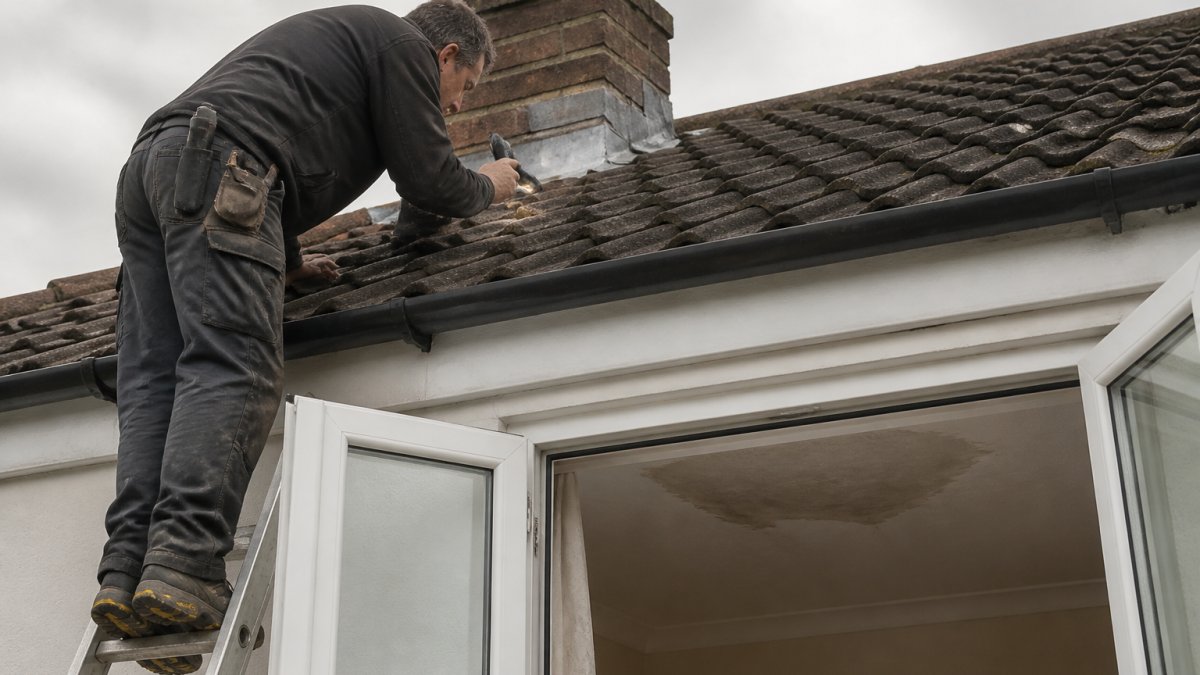
What to Do When Your Roof Leaks After a Repair
When your roof leaks after a repair, stop and document everything before calling anyone back. Catch the water, photograph the damage, and note the date and weather. Then contact the original roofer in writing.
A few practical steps:
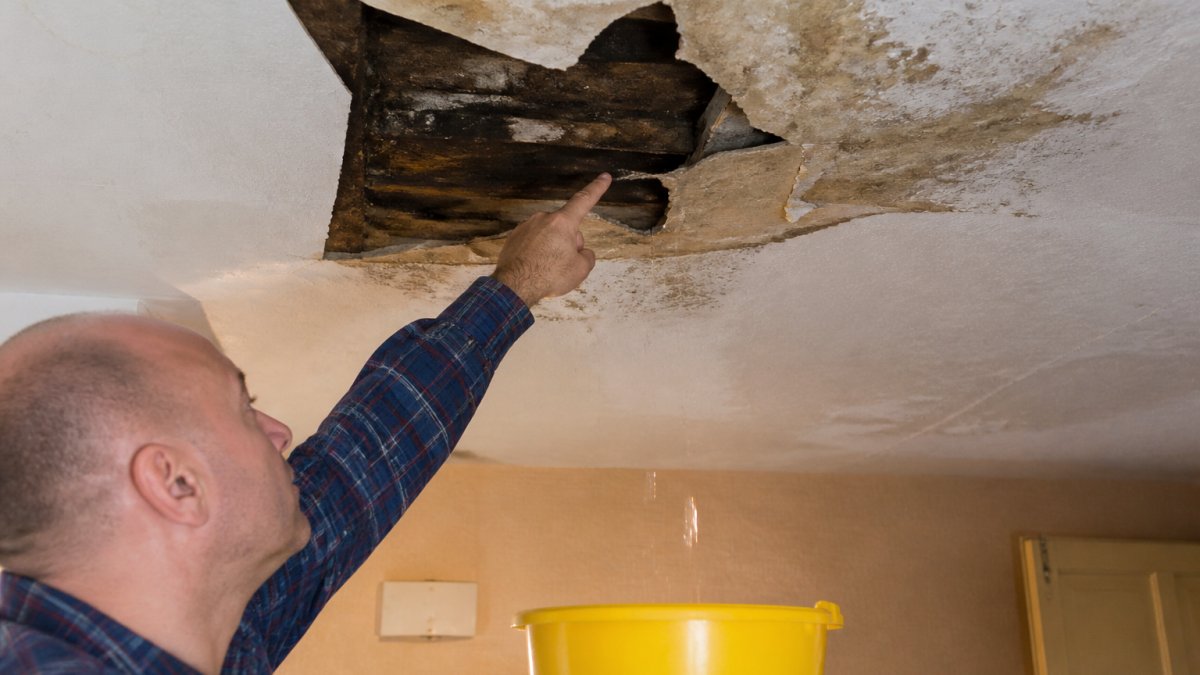
- Put a bucket down and move valuables clear
- Photograph the damp patch and any loft staining
- Note whether the leak appeared after heavy rain or wind-driven rain
- Ask the roofer to inspect, not just re-seal
- Get their findings in writing
If the same fault returns, that is a diagnosis problem, not bad luck. A reputable firm will want to find the cause. One that simply re-seals and leaves is telling you something.
Signs Your Roof Repair Failed (and What It Will Cost You)
Warning signs include damp that returns after every storm, fresh staining spreading across a ceiling, moss or damp patches on rafters, and granules collecting in gutters. Left alone, these point to rotten battens and failed underlay.
What it will cost you depends entirely on how long it is left. Small delays are cheap to fix. Long delays are not.
| Warning Sign | What It Usually Means | If Ignored |
|---|---|---|
| Damp returns after rain | Fault never found | Rot spreads through timbers |
| Staining spreads on ceiling | Ongoing water path | Plaster and insulation fail |
| Damp patches on rafters | Underlay breach | Structural timber decay |
| Granules in gutters | Worn covering | Full replacement sooner |
| Moss and algae growth | Poor drainage | Blocked gutters, soaked eaves |
Pricing depends on the extent of the damage, so we quote after inspection rather than guessing. Anyone quoting blind is guessing.
When a Repair Is the Wrong Answer
A repair is the wrong answer when the roof is near the end of its life, when the underlay has perished, or when damage covers a wide area. Patching these just buys time.
Ask yourself:
- Is the roof over 20 years old?
- Are there multiple leaks in different places?
- Is the underlay brittle or torn?
- Are battens soft or stained across a wide area?
If you answered yes to two or more, a full replacement is usually the better spend. It also gives you a durable, fresh finish rather than a patchwork of repairs.
Choosing a Roofer Who Fixes the Cause, Not the Symptom
Choose a roofer who inspects before quoting, explains the cause in plain terms, and puts the diagnosis in writing. That is the difference between a fix and a repeat visit.
Questions worth asking:
- Will you inspect the loft as well as the roof?
- What do you think is causing the leak, and why?
- Will you put that in writing?
- What happens if it leaks again?
M.C. Stormproof Roofing works across Lincoln and surrounding areas on repairs, full replacements, flat roofing and guttering. We find the cause first, then quote. You can check current guidance on roofing work and competent tradespeople before appointing anyone.
Conclusion
A leak that returns after a repair is frustrating, but it is nearly always traceable to a cause that was never found. Insist on a proper inspection, a written diagnosis and a fix aimed at the source.
If you are tired of repeat callbacks, M.C. Stormproof Roofing can help. We offer full roof replacements, flat roofing and guttering, all backed by professional installation and a proper diagnosis. Get a free quote and we will tell you honestly whether a repair or a replacement is the right call.
Frequently Asked Questions
Why is my roof still leaking after it has been repaired?
The most common reason is that the repair addressed the wrong spot. Water often enters higher up or further along than the visible damp patch, travelling along felt, battens or rafters before it shows on a ceiling. A repair can also fail because the underlying cause was never fixed: cracked flashing, blocked gutters forcing water back under tiles, or a patch applied over wet timber. If the leak persists after heavy rain, ask the roofer what diagnostic method they used and whether the repair came with a written guarantee.
How can I tell whether a roof repair has failed?
Watch for damp patches that return or spread after the next bout of rain, staining that appears in a different place, or water arriving faster than before. Check for lifted or displaced tiles, cracked sealant around flashing, and granules collecting in the guttering. A repair that has genuinely worked should keep the interior dry through sustained rainfall, not just a light shower. Photograph any new damp with a date so you have a clear record if you need to raise it with the roofer.
What should I do when my roof leaks after a repair?
Move valuables and electrical items clear, place a bucket under the drip and pierce any bulging ceiling paint to release trapped water safely. Do not climb onto the roof yourself, particularly in wet or windy conditions. Contact the roofer who carried out the work first, in writing, and give them a reasonable chance to return under their guarantee. If they are uncontactable or the work was clearly substandard, get an independent inspection and keep all quotes, photos and receipts.
Could blocked gutters or flashing cause a roof to leak again?
Yes, and both are frequently missed. Overflowing gutters push water back under the bottom row of tiles and into the fascia, which then reads as a roof leak. Failed flashing around chimneys, valleys and roof windows is another regular culprit, especially where mastic has been used instead of properly dressed lead. Ask for guttering to be cleared and checked as part of any repair visit, and confirm that flashing was inspected, not just the tiles.