 listicle
Signs Your Roof Needs Replacing: A Homeowner's Guide
Last Updated: 4 November 2026
Quick Summary
Early signs your roof needs replacing include brown stains on ceilings, damp or dark timber in the loft, daylight visible through the roof boards, and cracked, slipped or missing tiles or slates. Spotting these signs your roof is showing early lets you act before damage spreads into the structure and interior.
- Check ceilings, walls and the loft, ideally on a bright day with a torch.
- A stain that grows after rain points to a leak above it.
- Daylight visible through roof boards means water can also get in.
- Walk the outside from the ground once a year and check the loft after heavy storms.
- Never climb onto the roof; seek a professional assessment for sagging rooflines.
Table of Contents
- Why Spotting Roof Failure Early Saves Money
- Visible Signs of Roof Damage From the Inside
- Exterior Warning Signs: Tiles, Granules, Moss and Sagging
- How Long Does a Roof Last and Does Age Decide It?
- Roof Inspection Checklist You Can Follow Safely
- Roof Repair or Replacement: How to Decide
- What a Full Roof Replacement Costs and What Affects the Price
- Booking Your Roof Assessment in Lincoln
- Frequently Asked Questions
Water rarely comes through a roof in a dramatic rush. It usually starts as a faint stain on a bedroom ceiling, a patch of damp in the loft, or a slate that looks slightly out of line, and spotting these signs your roof is showing early is the first step to avoiding costly damage.
A roof is the element of a house that most people only think about when something goes wrong. It keeps rain, wind and snow out of the structure, and when it starts to fail, the damage spreads quietly into timber, insulation and plaster.
Why Spotting Roof Failure Early Saves Money
A roof that fails slowly does so in stages. Early stages usually mean a loose tile, a lifted ridge or a small area of worn flashing. Later stages bring water into the loft, rot in the roof timbers and damaged ceilings below.
Walking the outside of the house from the ground once a year, and checking the loft after heavy storms, catches most problems early.
Visible Signs of Roof Damage From the Inside
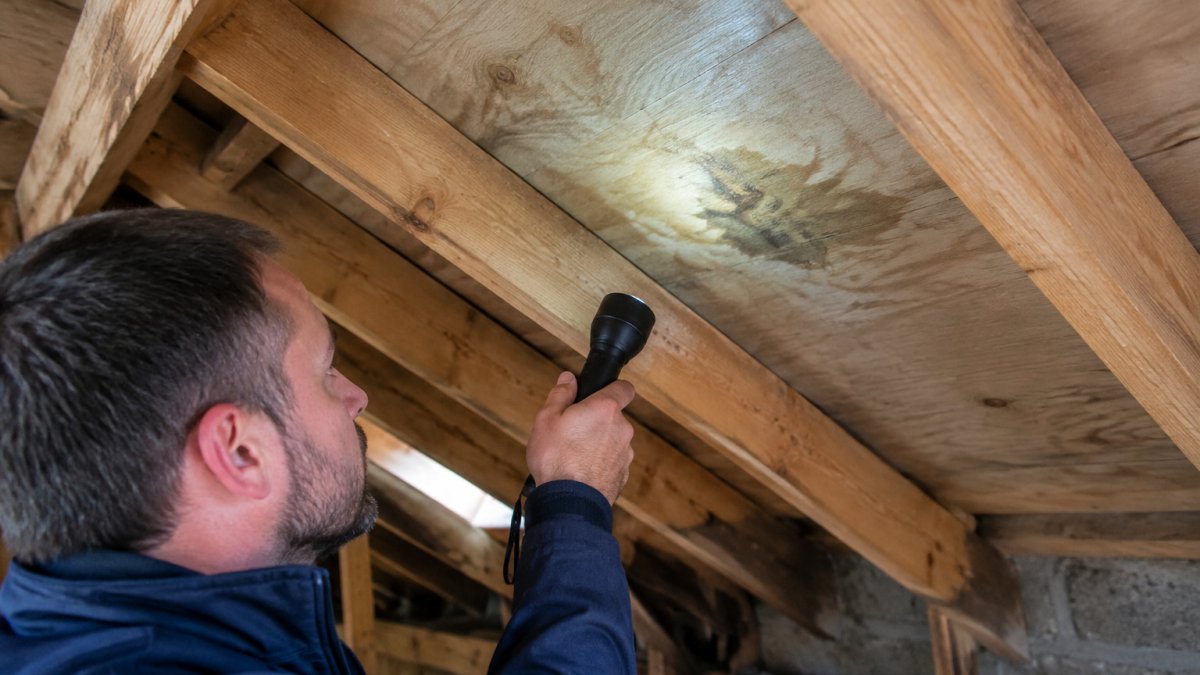
The inside of the house often shows roof problems before anything is visible from outside. Check the top-floor ceilings, the walls beneath the eaves and the loft itself, ideally on a bright day with a torch.
Water Stains, Damp Patches and Daylight Through Roof Boards
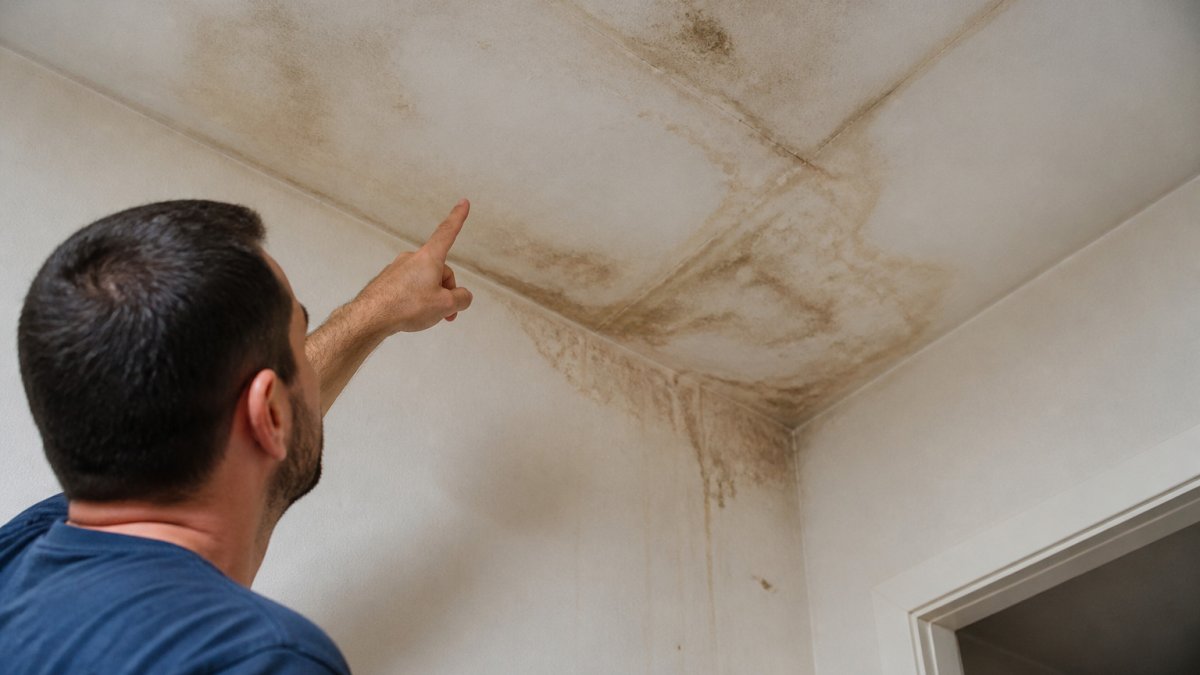
Brown rings on ceilings, bubbling paint and damp patches on walls are the most common signs of a leaking roof. A stain that grows after rain points to a problem above it. In the loft, look for dark or wet timber, mould on the underside of the roof boards, and any daylight coming through gaps in the covering.
!A homeowner in a loft holding a torch up to a sloped roof timber, with a faint water stain visible on the underside of the roof boards
Condensation and Poor Roof Ventilation in the Loft
Not every stain is a leak. Condensation forms when warm, moist air from the house meets a cold roof surface, and it can look very similar to water damage. Look for damp along the roof slopes, a musty smell and mould in the corners of the loft. Poor ventilation makes this worse, so check that the vents at the eaves and ridge are clear.
Exterior Warning Signs: Tiles, Granules, Moss and Sagging
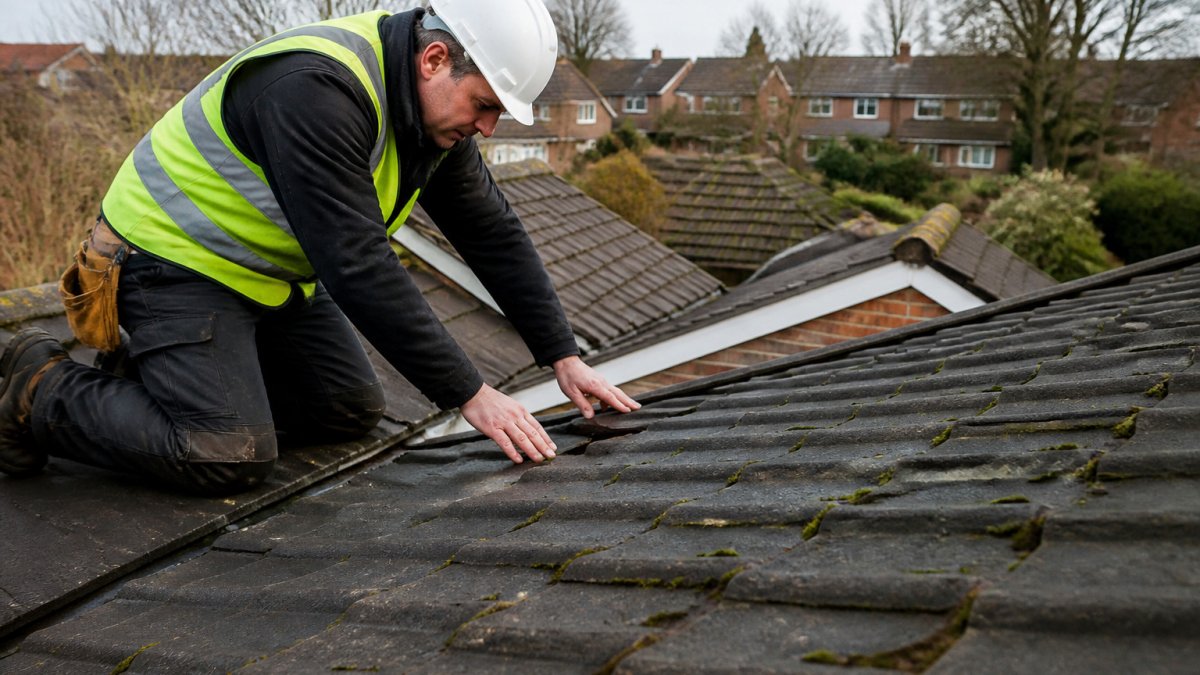
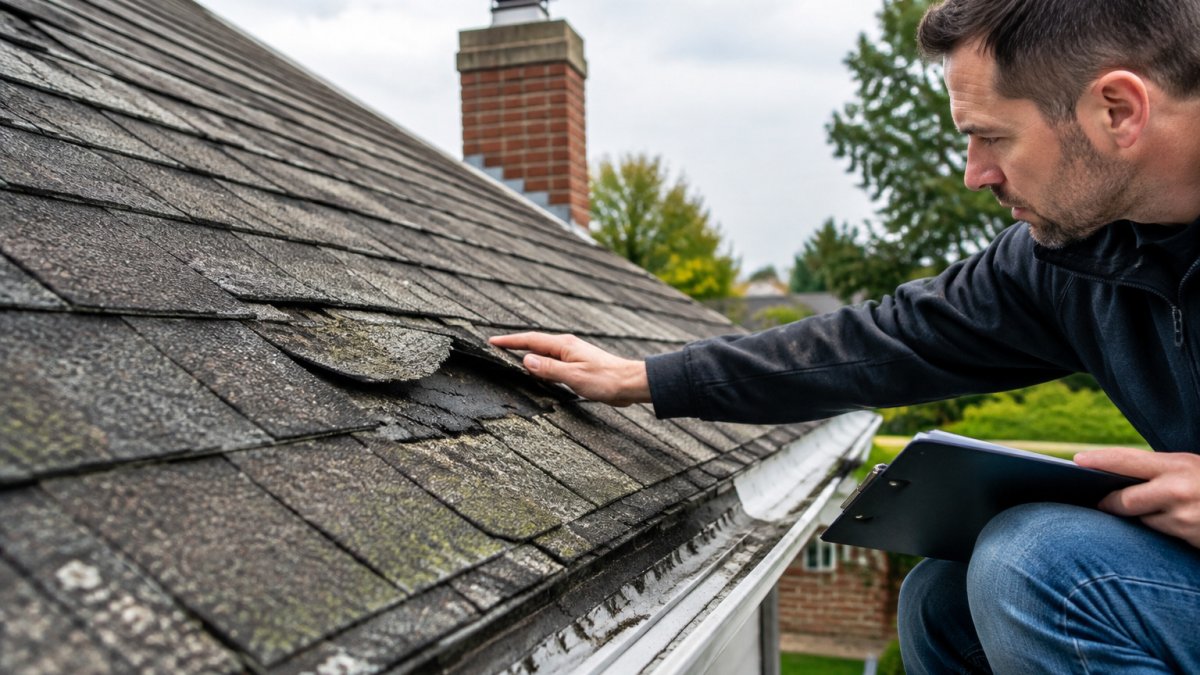
Outside, the signs are often easier to see from the pavement or a ladder placed safely on firm ground. Look for cracked, slipped or missing tiles and slates, and for moss or algae growing across the roof, which holds moisture against the covering.
A sagging or dipping roofline can indicate that the structure underneath has weakened. Do not go onto the roof to investigate; seek a professional assessment.
How Long Does a Roof Last and Does Age Decide It?
Age is a useful guide but not the whole answer. Life expectancy depends on the material, the quality of the original installation, the exposure to weather and how well the roof has been maintained.
As a rough guide, if the roof is approaching the end of its expected life and you are already seeing several of the signs above, replacement is more likely to be the sensible option than repeated patching.
Roof Inspection Checklist You Can Follow Safely
Use this checklist from the ground and from inside the loft. Do not climb onto the roof.
- From the ground, look for missing, cracked or slipped tiles or slates
- Check the ridge and hip lines for gaps or movement
- Look for moss, algae or heavy staining across the roof
Safety matters here. Never work at height on a wet or windy day, use a sturdy ladder on firm ground, and do not stand on fragile roof coverings or the loft boards without checking they are sound.
Roof Repair or Replacement: How to Decide
Most guides list the warning signs and then stop. The harder question is what to do once you have spotted them. A repair is usually the right choice when the damage is localised, the roof structure is sound and the covering is otherwise in reasonable condition.
The decision becomes clearer when you separate the problem into three layers: the covering (tiles, slates or membrane), the weatherproofing details (flashing, valleys, ridges and eaves), and the structure (battens, rafters and felt). A single cracked slate is a covering repair. Lifted chimney flashing is a detail repair. Rot in the rafters is structural, and structural work rarely stays localised once the covering is stripped back.
A Simple Decision Framework
Work through these questions in order. The first 'yes' usually points to replacement rather than another patch.
- Is the damage spread across more than one slope or elevation? Localised damage suits repair. Widespread wear across several elevations usually means the covering is at the end of its life.
- Have you already repaired the same area more than once in the last two or three years? Repeat repairs in the same spot point to an underlying problem that patching will not solve.
- Is the roof structure affected? Sagging, soft timbers, or daylight through the boards means the problem has moved beyond the covering, and replacement is usually the only durable answer.
Material-Specific Warning Signs
Generic advice misses the fact that different coverings fail in different ways.
Clay and concrete tiles. Look for cracked, broken or 'frost-shattered' tiles, especially after a hard winter, and for tiles that have lost their surface finish.
Flat roofing membranes. Look for blistering, splitting, ponding water that does not drain within 48 hours, and seams that have lifted.
Asphalt-style coverings. Granules in the gutters are the classic warning, as the protective surface is wearing away.
The Cost-Benefit Test
Add up what you have spent on roof repairs over the last three years, then add the likely cost of the repairs you can already see coming. If that total is approaching a meaningful share of a full replacement, and the roof is ageing or showing widespread signs, replacement is usually the better long-term investment. A professional inspection gives you a clearer picture before you decide.
Watch out: a quote that offers to 'patch it up' without inspecting the loft and the structure can leave you paying twice, once for the patch and again for the replacement it delayed by a year or two.
The article sets out a simple sequence of questions to help decide between repair and replacement, and the table below summarises the key tests.
| Question | Points to | Why |
|---|---|---|
| Damage spread across more than one slope or elevation? | Replacement | Widespread wear means the covering is at the end of its life |
| Same area repaired more than once in two or three years? | Replacement | Repeat repairs point to an underlying problem |
| Roof structure affected by sagging, soft timbers or daylight? | Replacement | Structural damage rarely stays localised |
| Covering near or past its expected service life? | Replacement | Repairs spent on a covering that will keep failing |
| Repair costs a large share of a replacement? | Replacement | Replacement is the better long-term investment |
| Damage localised, structure sound, covering otherwise sound? | Repair | A localised fix suits a sound roof |
What a Full Roof Replacement Costs and What Affects the Price
Costs depend on the size and pitch of the roof, the materials chosen, the condition of the roof structure, access and the amount of stripping and disposal needed. Because every property is different, fixed figures are misleading, but understanding what drives the price helps you compare quotes fairly and spot a quote that is too good to be true.
What Moves the Price
- Roof area and pitch. A larger roof needs more material and more labour. A steep or complex pitch is slower and less safe to work on than a simple low-pitch roof, so labour costs rise.
- Material choice. Natural slate is the most expensive common covering, followed by clay tiles, with concrete tiles and asphalt-style coverings at the lower end. The difference in material cost between these options is often larger than the difference in labour.
- Roof complexity. Hips, valleys, dormers, chimneys and multiple elevations all add detailing work, and detailing is where labour hours accumulate.
How to Compare Quotes Fairly
Ask every roofer to quote on the same specification: the same covering, the same underlay, the same battens, and the same scope for flashing, guttering and waste removal.
Ask each roofer two questions in writing: what happens if hidden structural damage is found once the roof is stripped, and how the price would change. A roofer who can answer that clearly is usually the one who has done the job properly before.
The Energy Efficiency Angle
A roof replacement is also the moment to improve the thermal performance of the house, because the work is already being done. Adding or upgrading insulation at the ceiling joists, and making sure the roof is properly ventilated so that insulation does not trap moisture, can reduce heat loss and improve the energy performance of the property.
For current pricing, contact M.C. Stormproof Roofing directly for a quote.
Booking Your Roof Assessment in Lincoln
If you are seeing any of the signs in this guide, the next step is a professional assessment. M.C. Stormproof Roofing specialises in new roofs and full roof replacements, and offers comprehensive roofing solutions including flat roofing and guttering.
Frequently Asked Questions
How do I know if my roof needs replacing?
Look for a combination of signs rather than a single fault. Daylight visible through roof boards from the loft, damp patches on ceilings that return after repairs, widespread cracked or slipped tiles, moss build-up across large areas, and granules collecting in the gutters all point towards a roof nearing the end of its life. If the roof is also sagging or you have had multiple leaks in a short period, replacement is usually the more cost-effective route. A professional assessment can help confirm the condition of your roof. Check our website for current prices or to request a quote.
How many missing roof tiles mean I need a new roof?
There is no single number that applies to every roof, because the position of the missing tiles matters as much as the count. A few missing tiles on a sound roof can usually be replaced in a repair. However, if missing or slipped tiles are spread across several areas, expose the underlay, or leave the roof battens and felt exposed to weather, the roof is likely to need wider attention. Multiple gaps combined with water entering the loft usually indicate that replacement will be more reliable than patching. A site survey is the best way to judge this accurately.
Can a leaking roof be repaired, or does it need replacing?
Many leaks can be repaired effectively, particularly when they are traced to a single damaged tile, a failed flashing around a chimney stack, or a split in a lead valley. Replacement becomes the better option when leaks appear in several places at once, when the felt or underlay has deteriorated, or when repairs have been carried out before without solving the problem. Repeated patching can hide a failing roof while the structure underneath continues to decay. Ask for a clear explanation of the source of the leak before agreeing to any work.
How long should a roof last?
The lifespan depends largely on the covering material, the quality of installation and the local weather exposure. Many concrete and clay tile roofs can last several decades, while some other coverings have shorter working lives. Roofs more than around 20 years old should be inspected regularly, because deterioration often accelerates with age. Regular maintenance, clearing gutters and keeping the loft ventilated can extend service life considerably. If your roof is approaching the end of its expected life and showing damage, planning a replacement is sensible.
GET A FREE QUOTE to find out what your roof needs.