 blog
7 Questions to Ask Before Hiring a Roofer for an Extension
Last Updated: November 1, 2026
Quick Summary
Before hiring a roofer for an extension, check their experience with flat and low-pitch roofs, their insurance, and their past work. Compare at least three quotes line by line, because a cheap price often means a smaller scope. Ask how they will handle drainage, falls and hidden damage. Specialist roofing contractors are worth seeking out because extension roofs fail in different ways.
- Ask for certificates for public liability insurance, not just verbal assurance.
- Collect at least three written quotes and compare them line by line.
- Confirm drainage outlets, falls and gutters in writing before work starts.
- Request photographs of recent extensions and speak to a previous customer.
- Agree in advance how extra costs for hidden damage will be handled.
Table of Contents
- Why Extension Roofing Needs a Specialist Approach
- Questions to Ask a Roofing Contractor Before You Commit
- How to Check Qualifications, Insurance and Track Record
- How to Compare Roofing Contractor Quotes Side by Side
- Your Roofing Contractor Checklist for Extension Projects
- What a Roofing Workmanship Guarantee Should Cover
- Booking a Survey and Getting Your Free Quote
- Frequently Asked Questions
Why Extension Roofing Needs a Specialist Approach
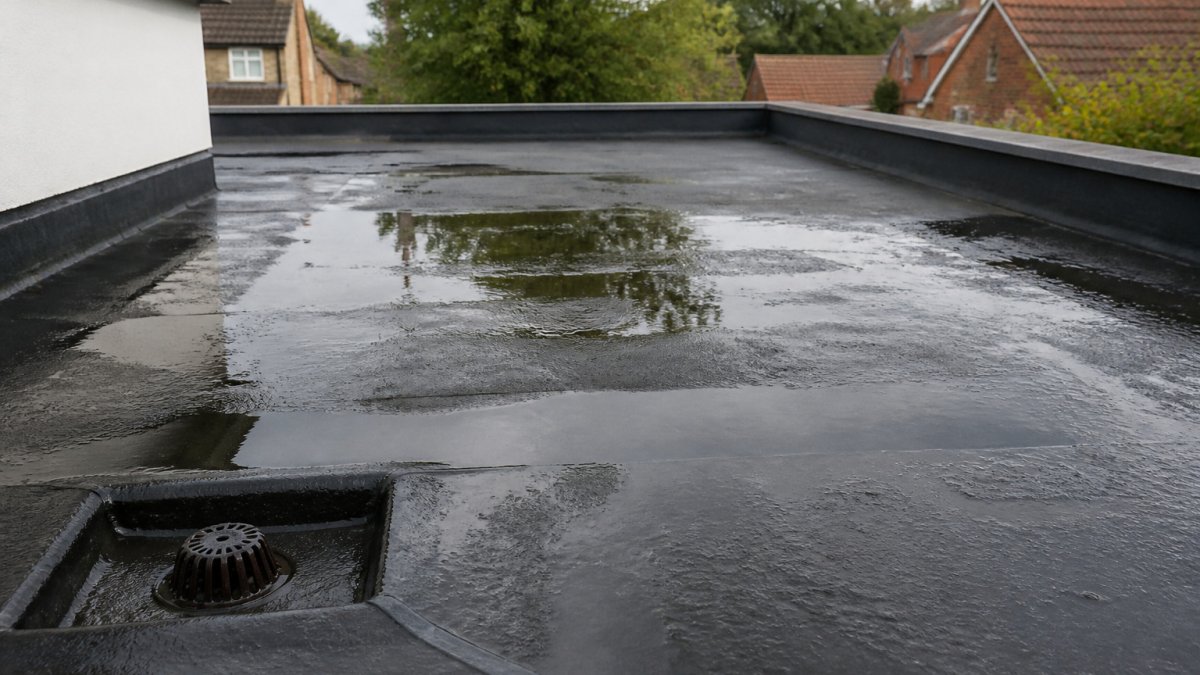
Extensions are not just a smaller version of a full roof, so specialist roofing contractors are worth seeking out. Most residential extensions use flat or low-pitch roofs, and those behave differently from a traditional pitched roof. Water drains more slowly, detailing around walls and windows matters more, and small faults can stay hidden for months. That is why choosing among roofing contractors for residential extensions needs a more careful check than choosing a general builder.
A flat roof can fail because the falls, outlets or junctions were never designed properly rather than because the material is poor. A roofer who regularly works on extensions will ask about these details early. If a contractor only mentions price and timescale, treat that as a warning.
Questions to Ask a Roofing Contractor Before You Commit
Before agreeing to any work, put a short list of questions to each contractor. Their answers reveal how they think about the job, and how they will handle the problems that often appear once old coverings are stripped back.
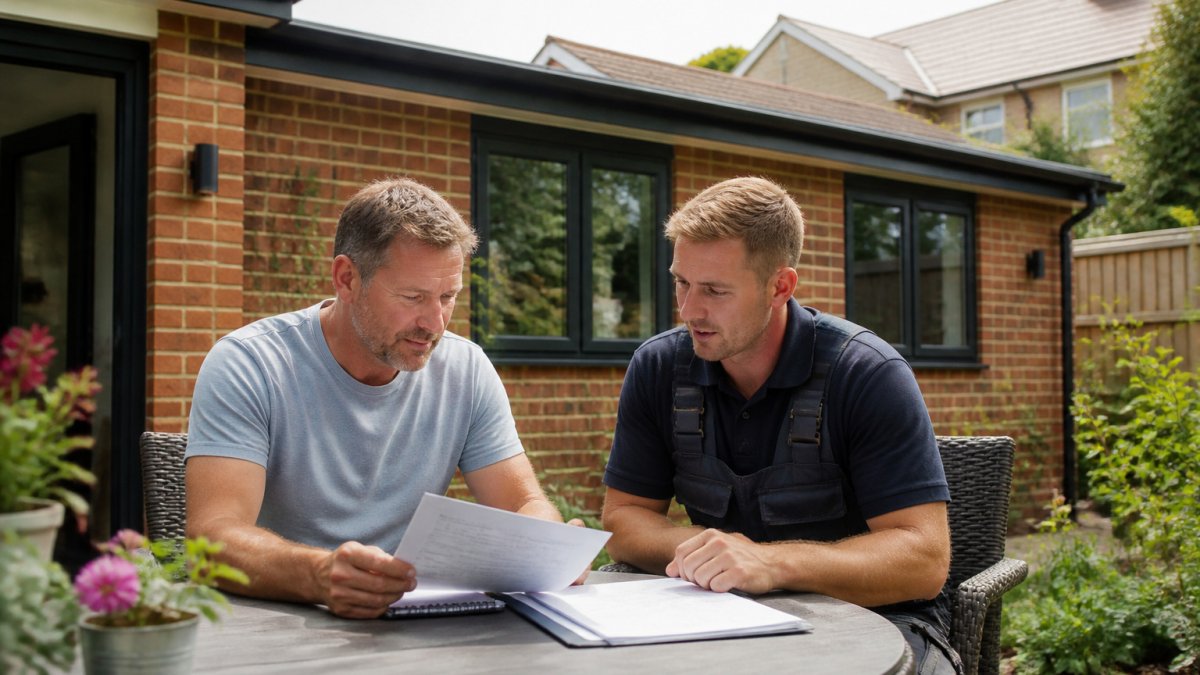
Ask how they will drain the flat roof, where the outlets will sit, and what falls they will create. Ask what they will do if they find rotten timber or damaged insulation. Ask who will be on site and whether they will supervise the work personally. Clear, specific answers are a good sign. Vague replies are not.
How to Check Qualifications, Insurance and Track Record
Start with paperwork. A reputable roofer should be able to show public liability insurance and, where relevant, membership of a recognised trade body. Ask to see the certificates rather than accepting a verbal assurance.
Next, look at evidence of past work. Request photographs of recent extensions, and where possible speak to a previous customer. Ask how the roof performed after heavy rain, not just whether the job was finished on time. A contractor confident in their workmanship will usually be happy to provide these details.
Watch out: a contractor who cannot name a single recent project of a similar size should not be trusted with your extension.
How to Compare Roofing Contractor Quotes Side by Side
Collect at least three quotes and compare them line by line. Differences in price often come down to what is included, not to the quality of the work. One quote may cover stripping the old covering and replacing timber, while another assumes the existing deck is sound.
Use a simple table to compare the key points:
| Item to compare | What to check |
|---|---|
| Scope of work | Does it include stripping, insulation and edge details? |
| Materials | Are membrane type and thickness stated? |
| Drainage | Are outlets, falls and gutters specified? |
| Warranty | How long does it last, and what does it cover? |
| Timescale | Is there a realistic start and finish date? |
What a Complete Quote Should Include
A complete quote lists the materials by name and thickness, the preparation work, the drainage design, the disposal of old materials, and the workmanship guarantee. It should also explain how extra costs will be handled if hidden damage is found. Quotes that say "roof replacement" with no detail are hard to compare fairly.
Why the Cheapest Quote Is Often the Costliest
The lowest price often reflects a shorter scope, thinner materials or no allowance for repairs to the deck. Compare what you are buying, not just the total.
Your Roofing Contractor Checklist for Extension Projects
Use this checklist before you sign:
- Public liability insurance certificate seen
- At least three written quotes compared line by line
- Drainage and fall design confirmed in writing
- Materials named with thickness and type
- Plan for hidden damage agreed in advance
- Recent photographs of similar extensions reviewed
- Written workmanship guarantee received
What a Roofing Workmanship Guarantee Should Cover
A workmanship guarantee should state how long it lasts, what it covers, and what it excludes. Ask whether it covers leaks caused by the installation itself, and whether it is backed by the contractor or by an insurer. A guarantee that is vague about these points offers little protection.
Get the terms in writing and keep a copy with your building documents. If a problem appears, you will need to know exactly what you are entitled to.
Booking a Survey and Getting Your Free Quote
The best next step is a site survey. A survey lets the roofer check the falls, the existing structure and the junctions before pricing the work, which gives you a far more accurate quote. You can book a site survey with M.C. Stormproof Roofing to discuss your extension.
If you want to compare figures before deciding, see how to get roof replacement quotes that actually compare so you know what to ask for. When you are ready, get a free quote from M.C. Stormproof Roofing.
Frequently Asked Questions
How do I choose a roofing contractor for a house extension?
Start with contractors who regularly work on residential extensions rather than general repairs alone. Ask for recent examples of similar flat or pitched roof work, and visit at least one completed job if possible. Confirm they will survey the site before quoting, that they can explain how the new roof will tie into your existing structure, and that they hold public liability insurance. A contractor who asks sensible questions about your build programme and access is usually a good sign. Avoid anyone who quotes without inspecting the roof first.
What should a roofing quote for an extension include?
A proper quote should itemise materials, labour, scaffolding or access equipment, waste removal and any preparatory work such as removing old coverings or repairing the deck. It should state the roof system being installed, the insulation specification, the membrane or tile type, and the warranty terms. Check whether the price covers flashings, guttering connections and edge details, since these are often where costs are missed. Pricing depends on the size of the roof, the access, the materials chosen and the programme, so ask for a written breakdown rather than a single figure. Contact M.C. Stormproof Roofing for a current quote tailored to your project.
What should a roofing workmanship guarantee cover?
A workmanship guarantee should clearly state how long it lasts and what defects it covers, typically faults caused by the installation rather than general wear or storm damage beyond the contractor's control. Ask whether it is backed by insurance or a product manufacturer's warranty, since a contractor may not be around in ten years. Get the terms in writing, including what you must do to make a claim and how quickly the contractor will respond. A guarantee is only as useful as the business standing behind it, so ask how long the company has traded locally.